
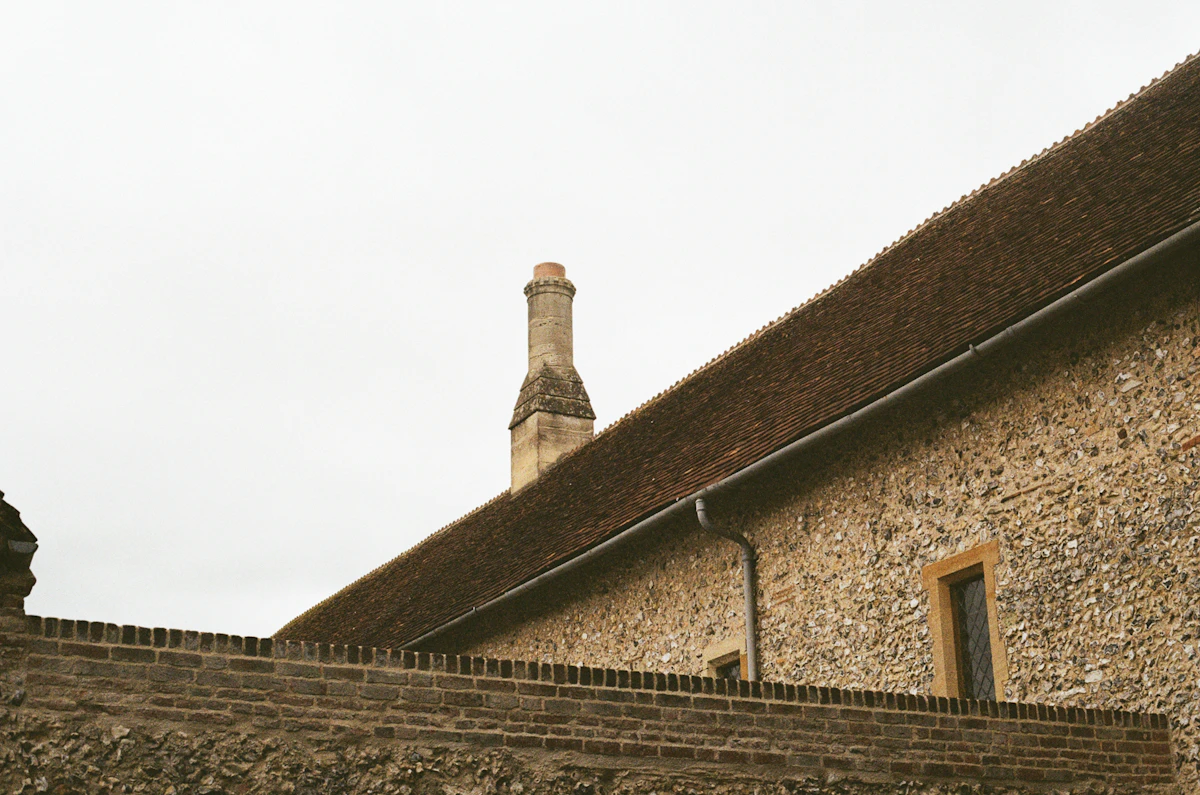
Signs to look out for
- Damp around a chimney breast after rain
- Open mortar joints or loose material on a chimney stack
- Lifting, split or poorly formed flashing at roof junctions
Three parts of a chimney repair
Pointing, flaunching and flashing do different jobs
Pointing is the mortar between the chimney’s bricks or stones. Flaunching is the shaped mortar around the base of the chimney pots. Flashing is the weatherproof junction where the stack meets the roof. A quote should identify which part needs attention, rather than treating all chimney damp as the same repair.
Leadwork beyond the chimney
Roof-to-wall junctions and valleys can also involve leadwork. A valley carries water between adjoining roof slopes; a wall junction needs flashing where the covering meets the masonry. If either is mentioned in a survey, share that wording and a wider photograph when enquiring so the location and proposed work are clear.
What should be inspected?
The check should cover the stack, mortar joints, pots, mortar around their bases and flashing. Loose masonry or movement needs a different response from ordinary surface weathering.
Repair or replacement?
Local mortar or flashing defects may need a focused repair. Unstable masonry can require rebuilding or specialist assessment. Repeated leaks are a reason to look more closely, rather than add another layer of sealant.
Materials and their trade-offs
Flashing needs to shed water while allowing for movement. Lead thickness and detailing must suit the junction, and replacement mortar must be compatible with the existing masonry.
What the quotation should include
- The masonry and flashing defects included
- Repointing, flaunching or rebuilding extent where applicable
- The proposed flashing material and junction details
- Scaffolding, debris protection and handling of any chimney fittings
Access and disruption
Chimneys are often the hardest part of a roof to reach. Scaffolding, neighbouring roofs and shared stacks need consideration. Work to the outside of a chimney does not establish whether its flue is safe to use.
What affects price and timing?
Stack height, access and the amount of masonry or flashing work shape the price. Loose brickwork hidden from the ground can change the repair needed.
Read the guide to roofing cost factors
Your questions, answered
Does damp by a chimney mean the flashing has failed?
Not always. Rain can enter through masonry or the mortar at the top of the stack, and condensation can leave similar marks. The cause needs checking before choosing a repair.
What if the chimney is shared with a neighbour?
Mention this when enquiring. The ownership, access and work affecting the shared stack need to be clear before repairs are arranged.
Helpful reading
Explore these repairs
Related services
Roof repairs · New roofs & re-roofing · Flat roofing · Slate & tile roofing · Guttering · Fascias & soffits