
Signs to look out for
- Repeated repairs across different parts of the roof
- Widespread deterioration of tiles, slates or fixings
- Problems with the covering, underlay or roof structure that cannot be resolved locally
What should be inspected?
A roof assessment needs to look beyond the surface. The covering, battens, underlay, ventilation and visible timbers all help establish what can stay and what needs replacing.
Repair or replacement?
Age alone is not a reason to replace a roof. The choice depends on its condition, the spread of the damage and whether further repairs are likely. A sound roof with one faulty area may still be repairable.
Materials and their trade-offs
Ask to see the proposed tile or slate profile and colour alongside a photograph of your property. If existing materials will be reused, the quotation should allow for sorting, breakages and replacement stock. The decision should cover the whole roof specification, not just its appearance.
For matching and covering details, see slate and tile material choices.
Choosing the replacement roof
Choosing a covering that suits the roof
The shape and colour are only part of the choice. A proposed tile or slate also needs to suit the roof’s slope and the weight the structure can carry. Dormers, valleys and other changes in shape affect the detailing. Ask why the proposed covering suits your particular roof, and what would change if you chose an alternative.
Further reading: Marley’s guide to choosing a roof covering.
What the quotation should include
- Strip-off, protection and disposal of the existing covering
- The proposed covering, underlay, battens and fixing specification
- Ridges, verges, valleys, flashing and ventilation details
- Scaffolding, site protection and the approach to hidden timber defects
Access and disruption
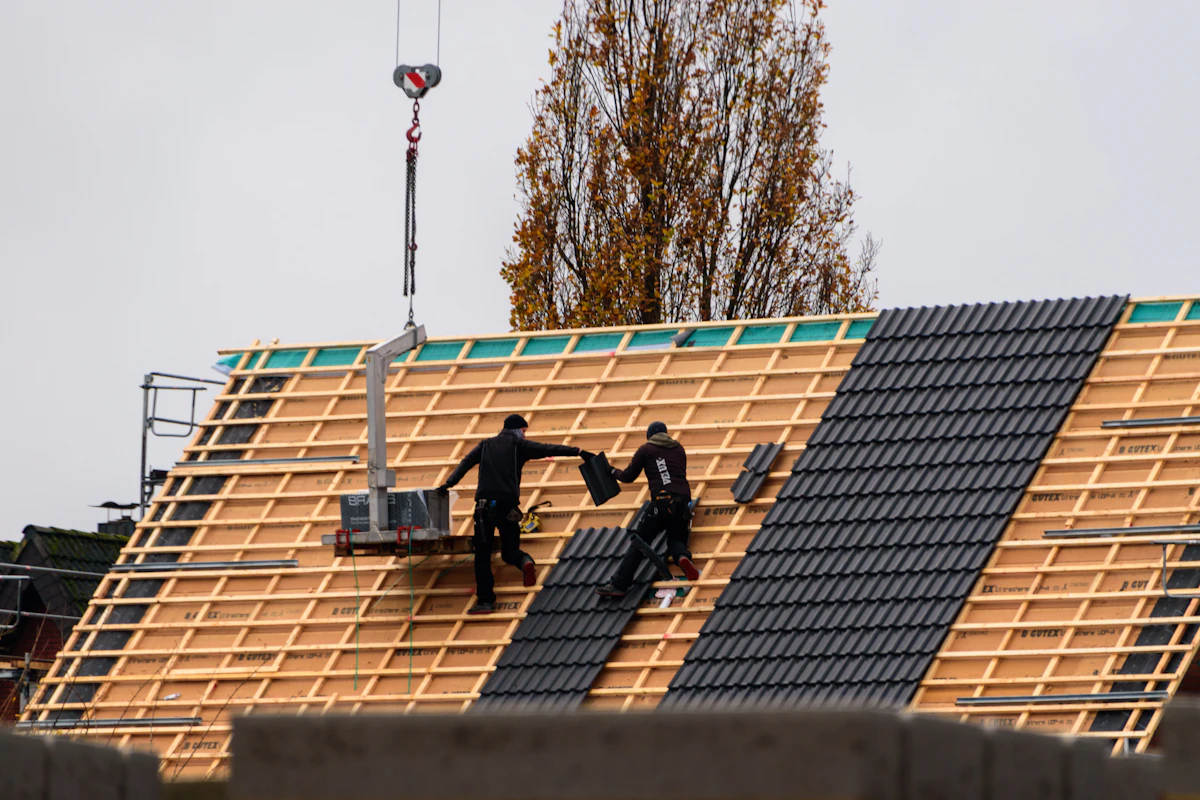
Scaffolding, deliveries and a skip all need space. Before work starts, the arrangements should cover access, shared boundaries and how the exposed roof will be protected.
What affects price and timing?
Size, shape and material choice are the main starting points. Chimneys, dormers, valleys, difficult access and timber repairs add work. The schedule also needs to allow for weather and material availability.
Read the guide to roofing cost factors
Your questions, answered
Can I stay at home while the roof is replaced?
Often the work can be planned around an occupied home, but this depends on the roof and the scope. Discuss noise, loft access and any areas that will be out of bounds.
Can the existing tiles be reused?
Sometimes. They need to be sound and suitable for the proposed roof specification. Sorting, breakages and replacement stock should be included in the plan.
Does a new roof need approval?
It depends on the building and the work. A change of covering, insulation work or a protected property can bring additional requirements. These should be checked for the specific proposal.
Helpful reading
Related services
Roof repairs · Flat roofing · Slate & tile roofing · Chimney repairs & leadwork · Guttering · Fascias & soffits