
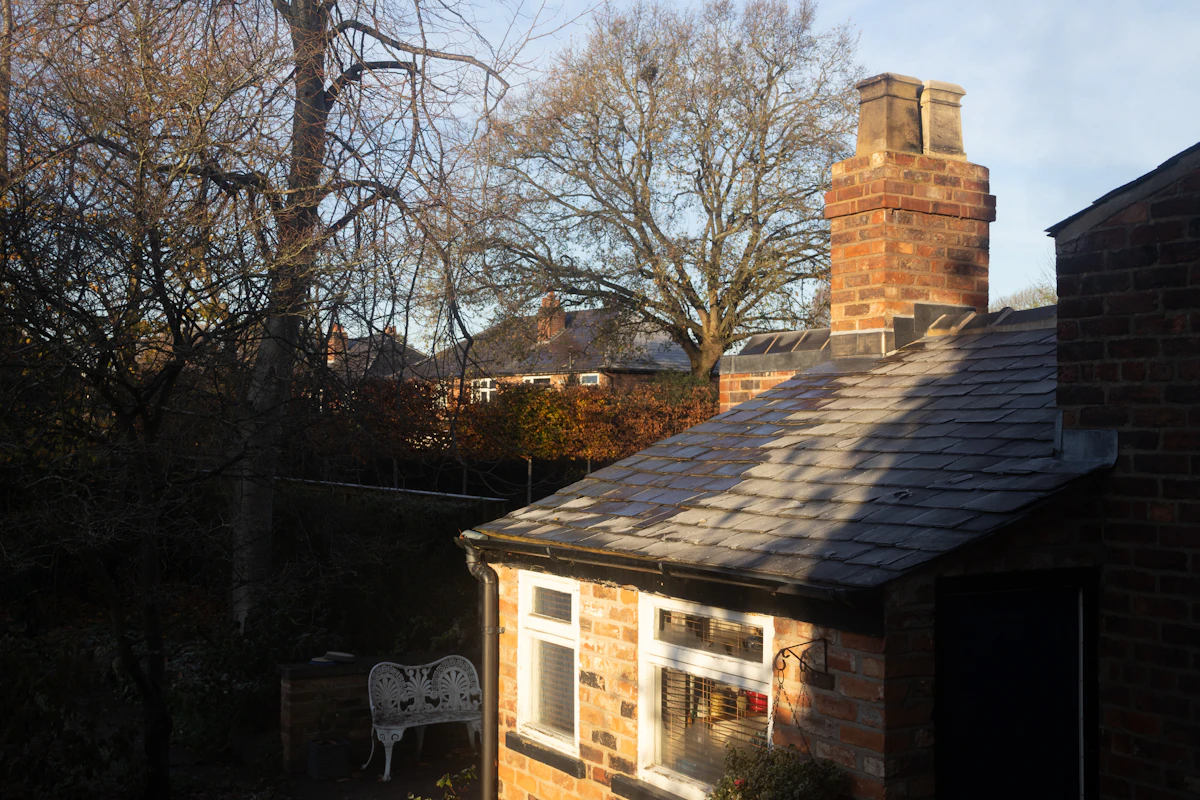
Signs to look out for
- Water staining on ceilings or in the loft after rain
- Missing, cracked or slipped tiles and slates
- Loose ridge pieces, damaged flashing or debris in gutters
Which part of the roof is affected?
Ridge, verge or valley?
The ridge is the top where roof slopes meet. A verge is the edge at the gable end of a pitched roof, while a valley is the channel where two slopes meet internally. If you can identify which part is affected from the ground, mention it when enquiring. A wider photograph is often more useful than guessing the name.
Flashing at a wall or chimney
Flashing seals the junction where a roof meets a wall, chimney or similar detail. Damp near that junction is a reason to check it alongside the surrounding masonry and covering. The visible stain alone does not show whether the flashing, brickwork or another part of the roof is responsible.
What should be inspected?
Water can travel before it leaves a mark on a ceiling. Checking tiles, flashing, ridges and valleys alongside the accessible loft space helps trace the source, rather than just patch the visible damage.
Repair or replacement?
An isolated fault may need only a local repair if the surrounding roof is sound. Recurring leaks, failing fixings or damaged underlay can point to a larger problem. Photographs of the defect help explain the options.
Materials and their trade-offs
Replacement tiles and slates need to suit the roof’s pitch, profile and fixings as well as its appearance. With flashing or mortar, a lasting repair also depends on addressing any movement or loose fixings underneath.
What the quotation should include
- The defect being repaired and the area included
- Replacement materials and whether matching stock is available
- Access equipment, waste removal and making good
- How hidden damage or additional work will be quoted
Access and disruption
Conservatories, shared driveways and narrow side passages can affect access. Even a small repair may need scaffolding to reach it safely.
What affects price and timing?
Access, roof height and the position of the fault can affect the price as much as the size of the repair. Matching materials and any damage beneath the covering also matter.
Read the guide to roofing cost factors
Your questions, answered
Can you find a leak from a photograph?
A photograph is a useful starting point, especially if it shows the roof and the damp patch. It may not show where water enters, so a closer inspection is often needed.
Should I climb up to take photographs?
Take photographs from the ground or another safe position. Do not climb onto the roof, and keep clear of loose or falling materials.
Will a repair match the rest of the roof?
That depends on the age, profile and availability of the existing tiles or slates. Weathering can also affect the match. The proposed material should be clear before work starts.
Helpful reading
Explore these repairs
Related services
New roofs & re-roofing · Flat roofing · Slate & tile roofing · Chimney repairs & leadwork · Guttering · Fascias & soffits